

Dry eye is a common condition that occurs when your eyes do not produce enough tears or when the tears evaporate too quickly. Tears are essential for maintaining the health of the eye’s surface and for providing clear vision. When the eyes lack adequate lubrication, discomfort and vision problems can occur.
Millions of people experience dry eye symptoms, especially those who spend long hours using digital screens, live in dry climates, or wear contact lenses.
What Is Dry Eye?
Dry eye, also known as dry eye syndrome, occurs when the tear film that protects the eye becomes unstable. Tears are made of three important layers:
- Oil layer – prevents tears from evaporating too quickly
- Water layer – hydrates and cleans the eye
- Mucus layer – spreads tears evenly across the eye surface
If any of these layers are disrupted, the eyes may become dry, irritated, or inflamed.
Common Symptoms of Dry Eye
Dry eye symptoms can range from mild irritation to persistent discomfort. Common symptoms include:
- A stinging or burning sensation in the eyes
- Redness
- Sensitivity to light
- Blurred vision
- A feeling of something in the eye (gritty sensation)
- Watery eyes (a reflex response to dryness)
- Eye fatigue, especially after screen use
Symptoms often worsen during activities that require intense focus, such as reading, driving, or using computers.
Causes of Dry Eye
Several factors can contribute to dry eye, including:
1. Prolonged Screen Use
When using digital devices, people blink less frequently, which causes tears to evaporate more quickly.
2. Aging
Tear production naturally decreases with age, particularly after age 50.
3. Environmental Factors
Wind, smoke, air conditioning, and dry climates can increase tear evaporation.
4. Contact Lens Use
Wearing contact lenses may contribute to dryness in some individuals.
5. Certain Medications
Some medications may reduce tear production, including:
- Antihistamines
- Decongestants
- Antidepressants
- Blood pressure medications
6. Medical Conditions
Conditions such as diabetes, thyroid disorders, and autoimmune diseases can also lead to dry eye.
How to Manage and Prevent Dry Eye
While dry eye can be uncomfortable, there are many ways to manage and relieve symptoms.
Use Artificial Tears
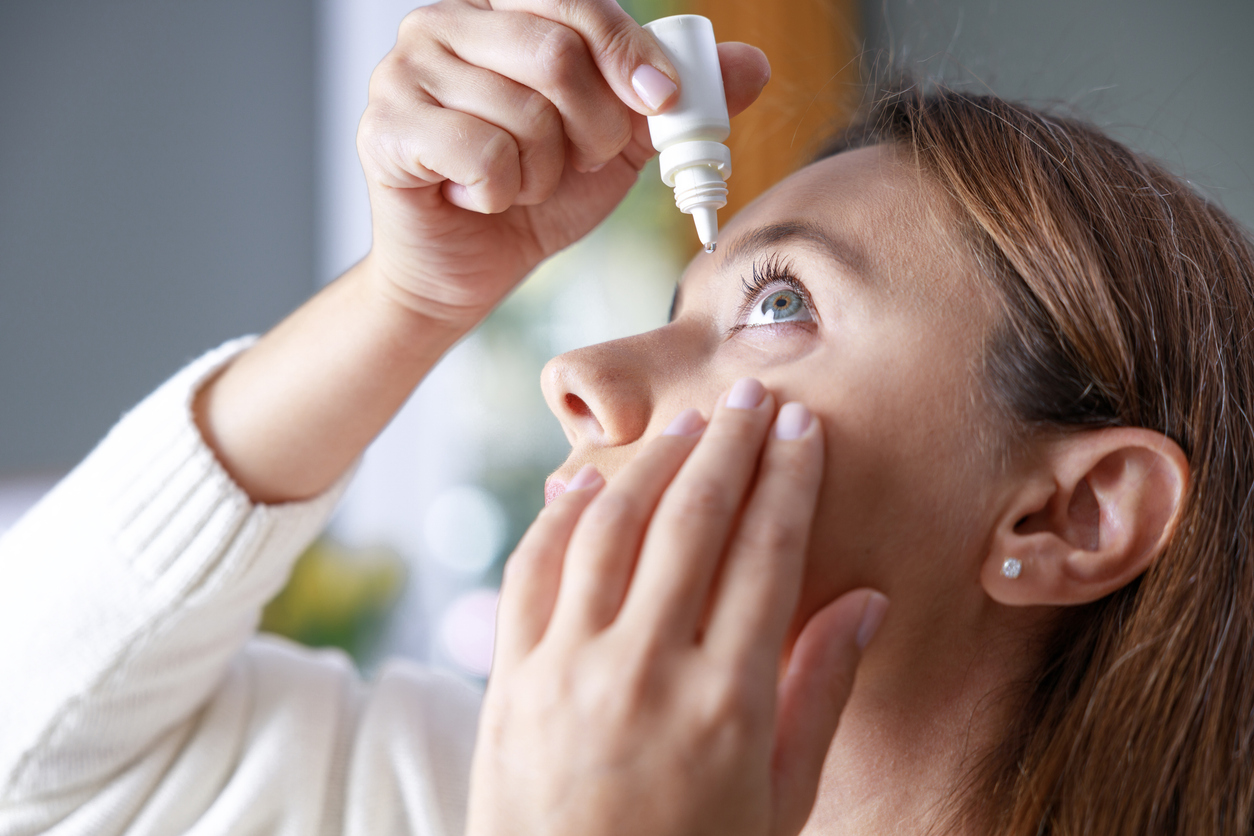
Lubricating eye drops can help keep the eyes moist and relieve irritation. Preservative-free drops are often recommended for frequent use.
Follow the 20-20-20 Rule
Every 20 minutes, look at something 20 feet away for at least 20 seconds to reduce digital eye strain.
Increase Humidity
Using a humidifier can help prevent tears from evaporating too quickly, especially in dry indoor environments.
Blink More Often
Making a conscious effort to blink while using screens can help spread tears evenly across the eyes.
Stay Hydrated
Drinking enough water supports healthy tear production.
Wear Sunglasses
Wraparound sunglasses help protect eyes from wind and environmental irritants.